How I Would Learn to Code If I Could Start Over in the AI Era
- Details
- Written by Nam Ha Minh
- Last Updated on 26 October 2026 | Print Email
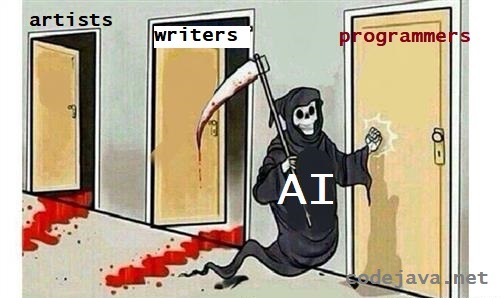
With AI coding assistants becoming increasingly capable of generating code, debugging applications, writing tests, and even building complete software projects, the way programmers work is changing rapidly. Skills that took years to develop can now be partially replicated by AI in seconds.As an experienced Java developer, I must admit that I'm struggling to keep up with these changes. Technologies and skills that served me well for years are no longer enough. I need to update my knowledge, learn new tools, and sometimes even rethink the way I approach programming.It's painful to realize that after spending more than 20 years learning and mastering programming, I now have to relearn many things to adapt to a new era.But change is inevitable. And refusing to adapt certainly won't make things any better.This situation makes me think about how I started learning to code more than two decades ago, when learning resources were extremely limited.
Imagine using a computer with only 256 MB of RAM, browsing coding websites through a dial-up modem just to download a few code examples, and then disconnecting because the Internet was both expensive and painfully slow at the time.
1. Learning Too Much Theory Before Actually Coding
My first mistake was learning way too much theory from traditional programming books like How to Program in C++ or Master Java in 30 Days.I remember doing something like 20 small exercises just about loops. Honestly, that wasn't necessary. Doing too many exercises on exactly the same topic doesn't necessarily help you move forward.Back then, I believed that I needed to understand almost everything about a programming language before I could start building something useful. As a result, I spent too much time reading books and completing exercises without producing anything meaningful.If I could start over, I would learn the basics of a programming language as quickly as possible. Then I would identify a small problem I'm currently facing and start working on a personal project to solve it.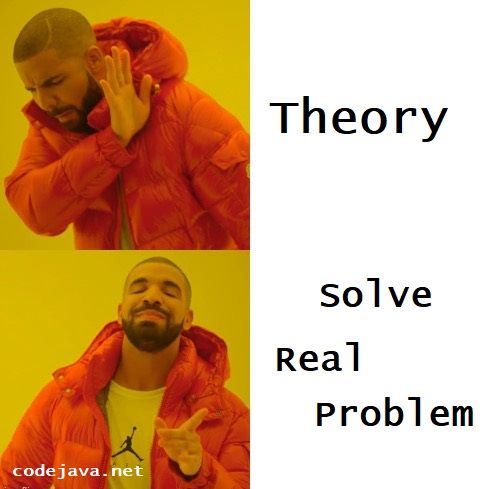 From there, I would continue learning whatever is necessary to complete that project.For example, let's say I realize that I need to back up some important data to an online server. Currently, I do it manually, and sometimes I forget to upload the files regularly.So I decide to build my own backup program that will automatically compress my data and upload the ZIP files once a week.While developing that application, I'll naturally realize that I need to learn File I/O, compression libraries, networking, FTP, and whatever technologies are required in the programming language I'm learning.Instead of studying these topics separately without knowing when I might use them, I'm learning them because I actually need them to solve a problem.That's a much more practical approach, and for me, it provides much more motivation than learning pure theory.Today, AI coding assistants can make this approach even more effective. When I get stuck, I can ask AI to explain unfamiliar concepts, suggest an implementation, or help me understand a piece of code. But I would still try to understand what the code does instead of blindly copying whatever AI generates.The key idea is simple: Learn the fundamentals, start building something useful, and continue learning as you go.Of course, once you've decided to learn by building real projects, another important question comes up: where should you find the knowledge needed to complete those projects?
That brings me to my second mistake.
2. Getting Stuck in Online Tutorials
The second mistake I made was wasting too much time on online tutorials.It's kind of ridiculous when I look back at it.One day, I would come across a promising Spring Framework tutorial, start following it, and then get stuck there - even though I didn't actually need Spring for anything at that moment.To be honest, I wanted to learn Spring Framework, but I lacked motivation because I wasn't using it to solve a real problem.You've probably experienced something similar.You discover an interesting tutorial, get excited about learning a new technology, and start following the lessons. But after a few days, your motivation disappears, and you give up halfway through.Why does this happen?In my experience, it's often because we don't have a clear purpose for learning that technology.If I could start over, I would begin with a problem that needs to be solved, and then find the tutorials that teach me the necessary technologies to build the solution.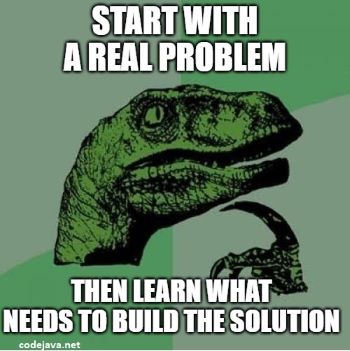 For example, imagine you're developing an application that uses the OpenAI API to create an anime-style comic book.You already know that you'll need to learn how to make API requests, process API responses, and work with image generation.That immediately helps you narrow down the tutorials you actually need.Instead of spending weeks following a general programming course, you might search for OpenAI Image API examples and learn the specific techniques needed for your application.Now you have a real reason to learn those things. And that purpose keeps you motivated and helps you learn faster.I believe there are tons of great tutorials out there. The real challenge is knowing which one to use at the right time.So my advice is to start with a real problem you want to solve, then find the tutorials that help you build the solution.However, learning only what you need for the next feature can introduce another problem. Without an overall direction, you might miss important knowledge or spend too much time jumping between technologies.
And that's exactly what happened to me.
3. Not Having a Clear Learning Roadmap
My third mistake was that I didn't have a big picture - or a clear roadmap - of a programming language and its technology stack when I started learning to code.More precisely, I didn't realize how important it was to have a practical learning roadmap.Because of that, I wasted a lot of time and made progress very slowly.If I could start over, I would zoom out first to understand the big picture, and then zoom in to learn the details.Today, getting a learning roadmap for almost any programming language or technology is incredibly easy. You can simply ask your favorite AI assistant.For example, let's say your goal is to become a Python developer.Start by getting a Python development roadmap. Then you can see that after learning Python fundamentals and object-oriented programming, you might want to learn a web framework like Django.And because you have a roadmap in front of you, you're less likely to completely miss important topics like data structures, algorithms, package managers, testing, databases, and other essential development tools.The roadmap also helps you understand how different technologies fit together and which topics you should learn first.Without it, you might learn a little Python today, switch to JavaScript tomorrow, and suddenly find yourself exploring machine learning next week without mastering any of them.Of course, a roadmap doesn't mean you must learn everything it contains before building your first application. I would use it as a guide to understand the overall learning journey while continuing to build practical projects along the way.In the AI era, I would ask an AI assistant to generate a roadmap based on my current knowledge, learning goals, and available time. Then I would review it and adjust the topics according to what I actually want to build.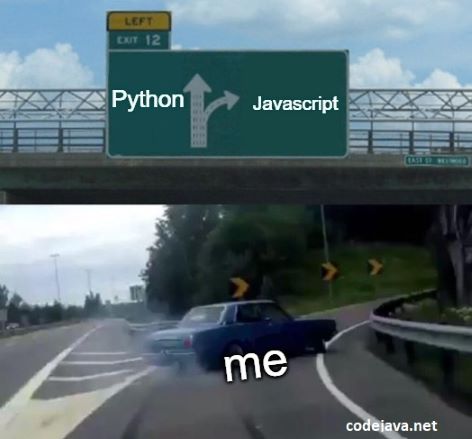 My strategy would be simple: Zoom out first to understand the big picture, then zoom in and master each piece one by one.Having a roadmap gives you direction. But direction alone isn't enough if you can't stay focused on your work.That leads to my fourth mistake, which I believe almost everyone has experienced.
4. Losing Focus and Procrastinating
The fourth mistake was a lack of focus and procrastination.I bet this story sounds familiar.One day, I started learning the Factory design pattern. I read the introduction, and then somehow, a little while later, I found myself watching Iron Man suit-up scenes.And suddenly, the entire evening I had planned for studying was gone.Instead of learning programming, I had spent the night enjoying movie clips.What a productive learning session, right?
 Looking back, I realize how easily small distractions could turn into hours of wasted time.If I could start over, I would use the Pomodoro technique to help myself stay focused.With this method, you split your coding or learning session into 25-minute focused intervals, with 5-minute breaks in between.For me, even the ticking timer can help switch my brain into productive mode and keep me away from distractions.Everyone only has 24 hours a day. If you lose focus, you're wasting time that could have been used for something meaningful.And this is one area where even an AI assistant can't completely save you.AI can explain things. AI can generate code. AI can create a learning plan.But you still have to sit down, focus, practice, and stay aware of what you're actually doing.I believe self-discipline and the ability to concentrate are becoming even more important in the AI era, because technology makes it incredibly easy to get answers quickly, but not necessarily to understand them deeply.Besides losing focus during my learning sessions, I also made another mistake that distracted me from what really matters in programming: spending too much time thinking about programming languages themselves.
5. Focusing Too Much on Programming Languages
When I was younger, I focused way too much on programming languages.C++, C#, Java, JavaScript, and all the other fancy languages are ultimately just tools we use to solve problems through programming.Your problem-solving ability matters much more.I remember having serious arguments with my friends about Java versus .NET.Which one was better? Which one was worth learning? Which one had a better future?We could spend hours debating the advantages and disadvantages of different programming languages and technology platforms.But over time, I realized that the programming language itself doesn't matter nearly as much as I thought.
 Whatever language you're learning - Java, Python, C#, or something else - the learning journey often follows a similar path: fundamentals, File I/O, networking, data structures, algorithms, development tools, libraries, frameworks, and so on.Of course, different languages have their own strengths, weaknesses, and ecosystems. Choosing the right language still matters for a particular project.But I no longer believe that becoming an excellent programmer is simply about mastering one specific language.What really matters is your ability to understand problems, design solutions, and use appropriate technologies to implement them.This becomes even more relevant in the AI era, when coding assistants can generate programs in many different languages.If I could start over, I would begin with the problem I want to solve, and then choose the programming language that's best suited for building the solution.Don't fall in love with the hammer. Focus on the thing you're trying to build.Once you've chosen a programming language and have a roadmap to follow, the next challenge is turning your learning goals into concrete actions.Unfortunately, that's another thing I didn't do very well.
6. Not Having a Detailed, Actionable Learning Plan
My sixth mistake was that I didn't have a detailed, actionable plan that I could seriously follow.And obviously, this was partly caused by the previous problem of not having a clear roadmap.One mistake led to another.For example, at one point, I was really excited about learning Windows programming with C++.Then, after only a few learning sessions, I got distracted by Java graphics because I saw a cool 3D model of a molecule running in a web browser.So I jumped from C++ to Java before finishing what I had started.If I had had a proper learning plan, I could have completed my C++ learning goals first before moving on to something else.That's why I believe a roadmap and an actionable plan serve different purposes.A roadmap shows you what you need to learn and how different topics connect. An actionable plan tells you exactly what to do, when to do it, and how much time to spend on each activity.If I could start over, I would create a plan right from the beginning.For example, suppose I want to learn JavaScript in three months. My plan might look like this:- Study two hours a day, five days a week.
- Follow a clear JavaScript learning roadmap.
- Break down the learning topics into weekly goals.
- Practice coding regularly and build small projects.
- Use a to-do list or checklist to track my progress.
 And today, of course, I would use AI to help create that plan in much more detail.I could tell an AI assistant my learning goal, current skill level, available time, and the type of applications I want to build.Then I could ask it to generate a practical learning schedule with specific tasks, exercises, and project milestones.I could also ask AI to review my progress and suggest adjustments whenever I run into difficulties.Having a detailed plan doesn't guarantee success, but it certainly provides a clearer direction and makes it easier to measure progress.However, there's one thing I would never sacrifice just to follow a learning plan: My health.And that brings me to the final mistake, which I believe is the most easily overlooked one.
7. Ignoring My Health and Biological Clock
My final mistake is probably the biggest trap on this list.It's something many programmers either don't realize - or simply choose to ignore.I used to sit in front of my computer for hours without taking proper breaks, sometimes from morning until midnight.And sometimes, I would play games with my friends until four or five in the morning.Then I would go to bed while everyone else was waking up.I would start my day around lunchtime while everyone else was already halfway through theirs.Basically, I completely messed up my biological clock.That continued until I got a real job and had to adapt to a normal nine-to-five schedule.Unfortunately, those unhealthy habits have affected my body for years afterward. I've experienced blurred vision, wrist joint pain, cervical spondylosis, and other problems associated with my long hours in front of a computer.When I was younger, I didn't pay much attention to those things. I thought spending more hours coding meant I was learning faster and becoming a better programmer.But looking back, I realize that learning to code shouldn't come at the expense of your health.If I could start over today, I would take my health much more seriously.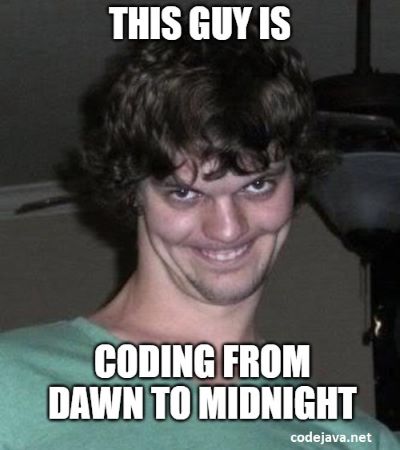 I would respect my biological clock, maintain a regular sleep schedule, exercise regularly, and avoid sitting in front of a computer for too long without breaks.I would also use the Pomodoro technique not only to stay focused, but also to give my eyes and body regular breaks.For example, I could work for 25 minutes, take a 5-minute break, and after four rounds, take a longer break of around 20 minutes.During those breaks, I would stand up, stretch, walk around, and give my eyes some time away from the screen.The goal isn't just to work smarter. It's to work healthier as well.No matter how fast AI technology evolves, we still need a healthy body and a clear mind to learn, think, and solve problems effectively.And that's a lesson I wish I had learned much earlier in my programming career.
Conclusion: How I Would Learn to Code Differently in the AI Era
Those were the seven biggest mistakes I made in my early days of learning to code:- Learning too much theory before actually building things.
- Getting stuck in online tutorials without a clear purpose.
- Not having a roadmap to understand the big picture.
- Losing focus and procrastinating.
- Focusing too much on programming languages instead of problem-solving.
- Not having a detailed, actionable learning plan.
- Ignoring my biological clock and physical health.
Recommended Futher Reading:
- Is Java Still Worth Learning in the AI Era?
- The 80/20 Rule in Programming: 10 Things I’ve Learned from Real Software Projects
- How to become a good programmer? 13 tasks you should practice now
About the Author:
 Nam Ha Minh is certified Java programmer (SCJP and SCWCD). He began programming with Java back in the days of Java 1.4 and has been passionate about it ever since. You can connect with him on Facebook and watch his Java videos on YouTube.