Java Developers versus AI: 15 Hilarious Memes About Coding in the AI Era
- Details
- Written by Nam Ha Minh
- Last Updated on 20 October 2026 | Print Email
1. The Draw 25 School of Programming
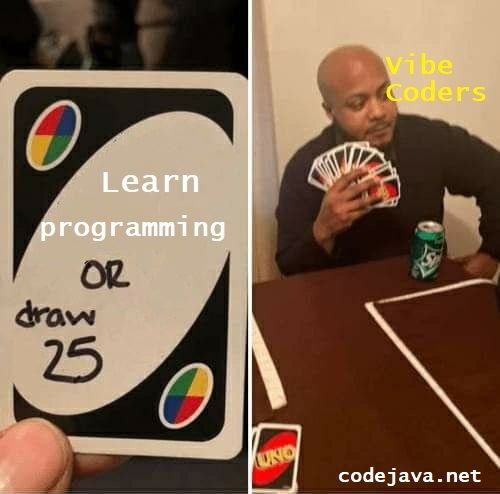
Why learn the language when you can prompt your way around the entire curriculum?
The poor player was offered two choices: learn programming or draw 25. He now has enough cards to build a distributed system, but still cannot explain what a variable does.
Vibe coding makes every tutorial feel optional. The plan is simple: describe the app confidently, accept the generated code, and hope the compiler also responds to positive energy.
2. Everybody Gets Saved Except the Programmer
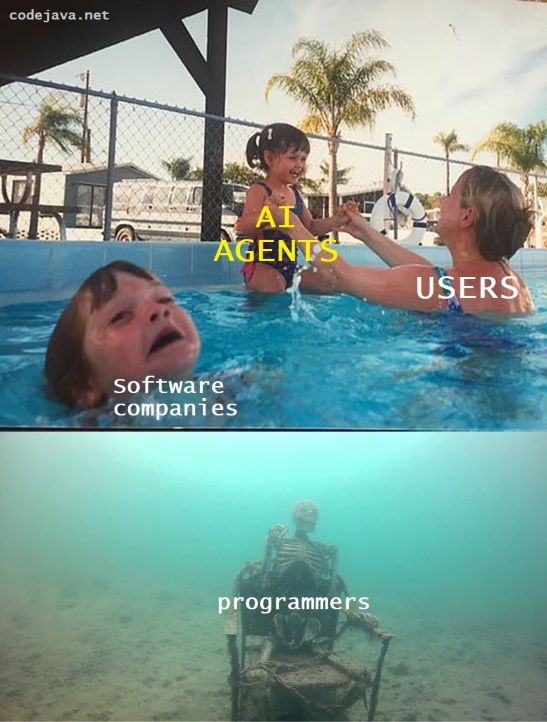 AI agents rescue users, software companies rescue revenue, and somebody forgot the programmer underwater.
The users are delighted because the agent finishes their work. The company is delighted because the agent can be sold as a premium feature. The programmer is delighted too, assuming skeletons can still feel delight.
3. The Two States of Vibe Coding
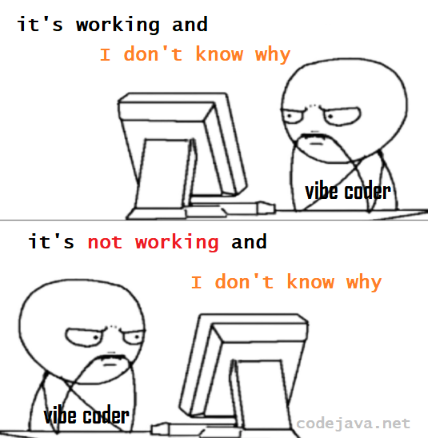 It works. I do not know why. It broke. Excellent news: I still do not know why.
Traditional debugging starts with evidence. Vibe debugging starts by asking the same prompt again with more exclamation marks and the phrase please be careful this time.
The codebase has achieved quantum stability: nobody understands it until production observes it. At that moment, it becomes either a miracle or a Jira ticket.
4. Java Extends Artificial Intelligence
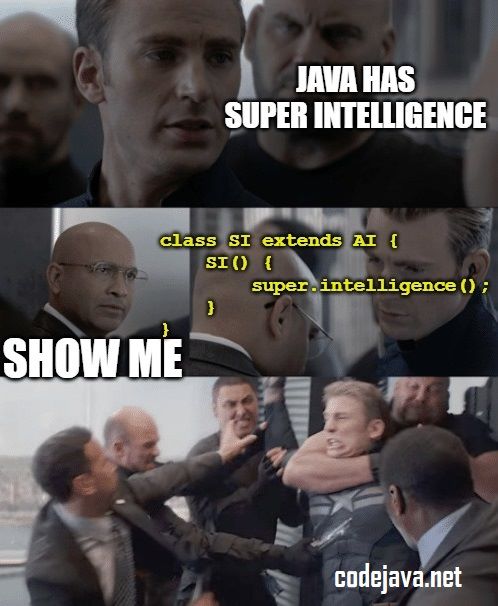
Java has super intelligence because someone called super intelligence in the constructor.
The interviewer asked for proof. The developer produced a class hierarchy. Seconds later, Captain America was restrained for trying to explain that inheritance does not work like that.
5. Java Developers in 2027
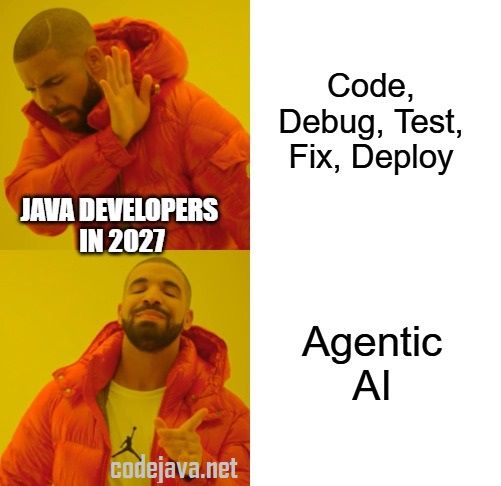
Code, debug, test, fix, and deploy? No thanks. I prefer one agent and five minutes of suspense.
Of course, the agent may still code, debug, test, fix, and deploy. The key innovation is that the developer can watch the logs with both hands free for coffee.
6. From Hello World to Goodbye Career
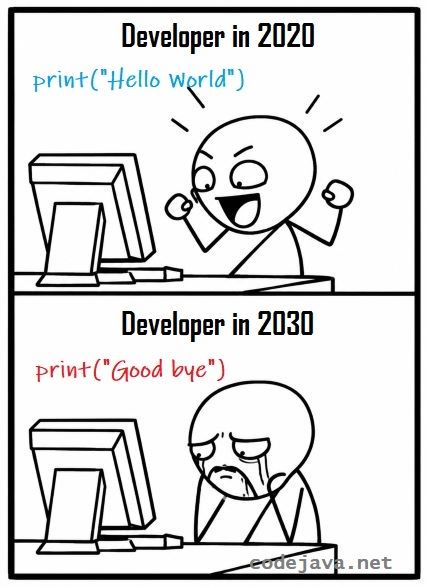 In 2020 the developer printed Hello World. In 2030 the world printed Goodbye Developer.
The saddest part is that the goodbye program still fails on the first run. The developer must return from retirement to add the missing semicolon.
7. HallucinationException
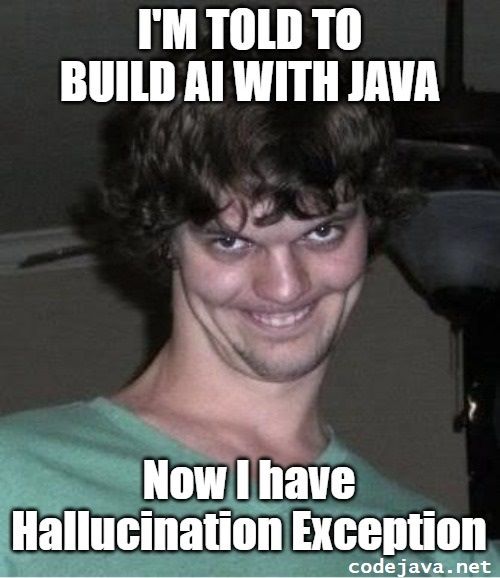
I was told to build AI with Java. Now my application throws HallucinationException with complete confidence.
The stack trace is wonderfully specific. It points to line 42 in a library that does not exist, inside a method the model insists was added in Java 37.
8. The Enterprise AI Magic Wand
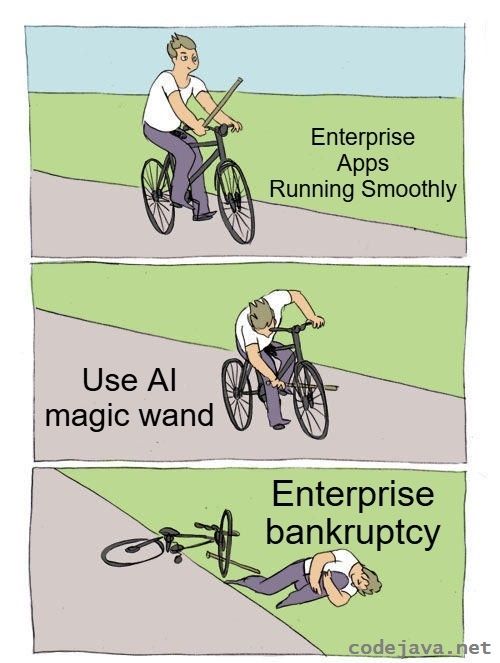 The enterprise app was running smoothly, so naturally someone waved an AI magic wand at it.
9. The Most Dangerous Skill in the Meeting
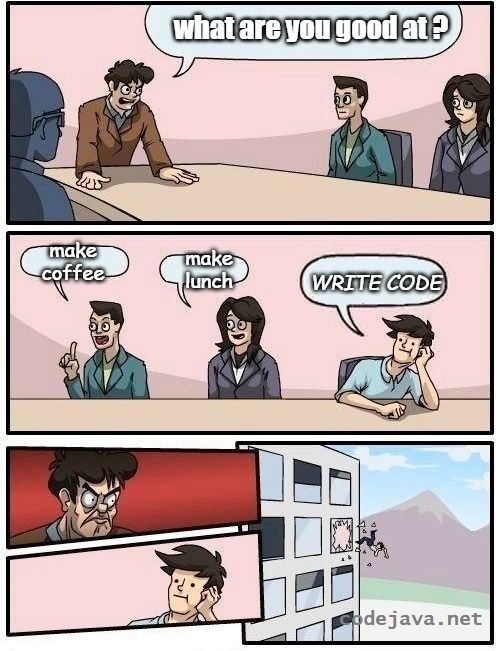
Coffee stays. Lunch stays. The person who writes the software is apparently a cost center with legs.
Nobody asks who's going to fix the AI-generated code when production crashes.
10. Goodbye Stack Overflow Hello Coding Agent
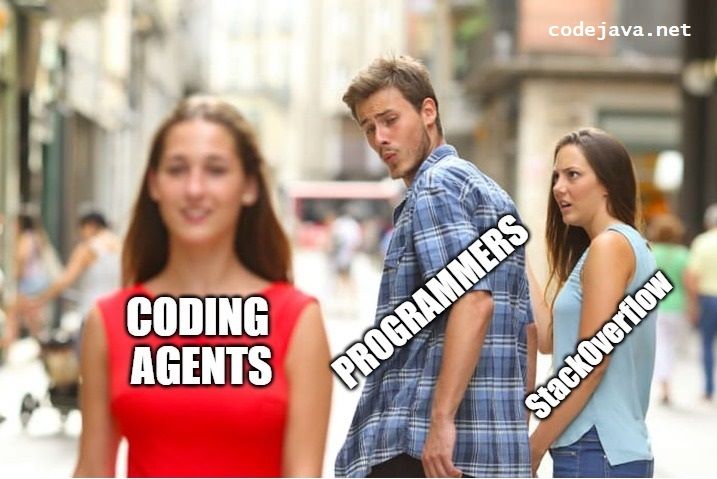
Programmers left Stack Overflow for AI, which learned half its answers from Stack Overflow.
Stack Overflow watches in disbelief. After years of telling developers to read the documentation, it has been replaced by a machine that also did not read the documentation.
11. Trust the AI or Review Two Thousand Lines
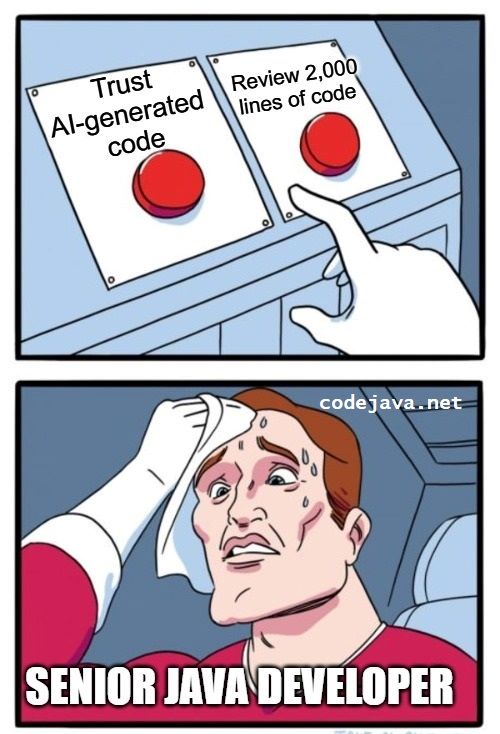
Trust AI-generated code or review 2,000 lines. The third button is update your resume.
Reviewing the code will take all afternoon. Trusting it will take five seconds, followed by an incident call that lasts until breakfast.
12. The Junior Developer Takes the AI Exit
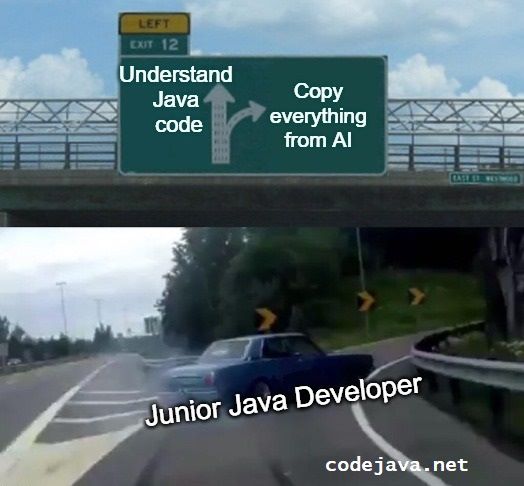
The sign said Understand Java Code. The junior developer saw a faster exit labeled Copy Everything from AI.
The copied solution works beautifully until someone asks what it does. Then the junior developer opens a new chat and pastes the question, the code, and possibly the production database password.
13. Spring Boot in Minutes and Bugs in Seconds

AI can build an entire Spring Boot application in minutes. Without bugs, right? Right?
AI is brilliant at producing 90 percent of an application quickly. The remaining 10 percent includes security, correctness, maintainability, and the tiny detail where the application must actually start.
14. The NullPointerException Partnership
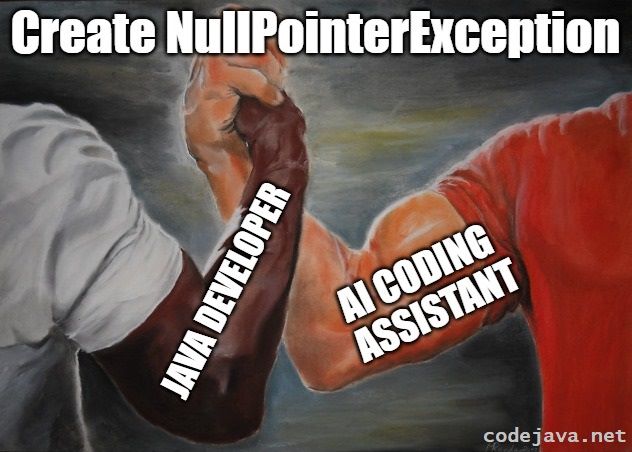
Java developer plus AI coding assistant equals twice the productivity and the same NullPointerException.
This is the most honest picture of collaboration in the collection. The developer supplies domain knowledge, the AI supplies speed, and null supplies the team-building exercise.
15. The AI Has Never Seen Its Own Code
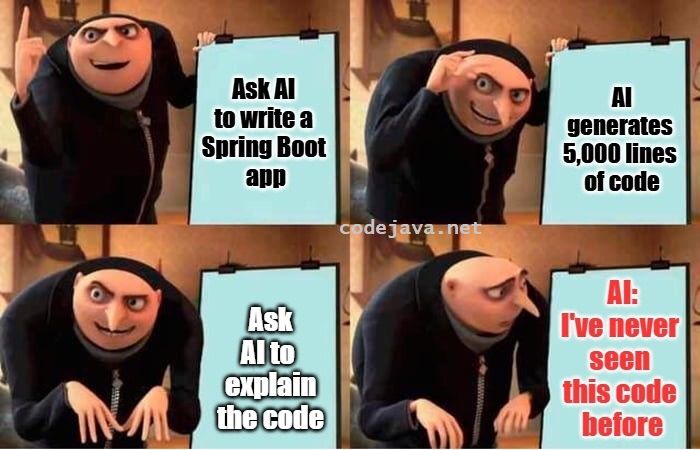
The AI wrote 5,000 lines, then reviewed them like a detective arriving at someone else's crime scene.
The assistant studies its own masterpiece and says it has never seen this code before. For once, the developer and the AI agree completely.
The Developer Still Has the Last Commit
These memes make AI look reckless, forgetful, overconfident, and occasionally responsible for enterprise bankruptcy. That is funny because the description also fits a surprising number of software projects created entirely by humans.AI will change Java development. It will remove some repetitive work, accelerate experiments, and let one developer explore ideas that once required a larger team. It will also generate bugs at machine speed, misunderstand requirements, and produce convincing code that solves the wrong problem. The useful skill is therefore not typing faster than a model. It is knowing what should be built, recognizing when an answer is wrong, and taking responsibility for the result.Java developers already have the habits needed for that future: reading logs, questioning abstractions, testing assumptions, and surviving frameworks with more configuration than documentation. The best teams will treat AI as a powerful colleague with unlimited energy and absolutely no production access without review.So keep learning the language. Use the agent. Read the diff. Write the tests. Ask why. The machine may generate the next 5,000 lines, but a human still decides whether those lines deserve to become software. That is good news for developers - and terrible news for NullPointerException, which will now be found twice as fast.Enjoy more memes like this:
- Java 27 in Memes: What Developers Actually Think
- New to Java Memes: These Jokes Will Make Learning Java Less Painful
- The Funniest Java Memes You Can’t Resist Laughing At
About the Author:
 Nam Ha Minh is certified Java programmer (SCJP and SCWCD). He began programming with Java back in the days of Java 1.4 and has been passionate about it ever since. You can connect with him on Facebook and watch his Java videos on YouTube.